Back to Media
SimpleSwap Review by CryptoSlate
About this site

CryptoSlate
URL:
cryptoslate.comCryptoSlate is a cryptocurrency media and data platform covering blockchain markets, regulation, technology, companies, and digital assets. It publishes news, research, guides, market data, interviews, and analysis for crypto users, investors, developers, and professionals working across the blockchain industry.
Article Preview

Summary
CryptoSlate examines how the meaning of self-custody is changing as users manage assets across more wallets, blockchains, and applications. Holding private keys remains the foundation, but the publication argues that control alone is not enough. Users also need a reliable way to move between assets without leaving the wallet-based environment they chose.
The article focuses on execution. A self-custody user may hold the correct asset but on the wrong network, need a different token for fees, or face limited liquidity for a particular pair. Solving these problems manually can require a combination of bridges, decentralized exchanges, centralized platforms, and additional network tokens.
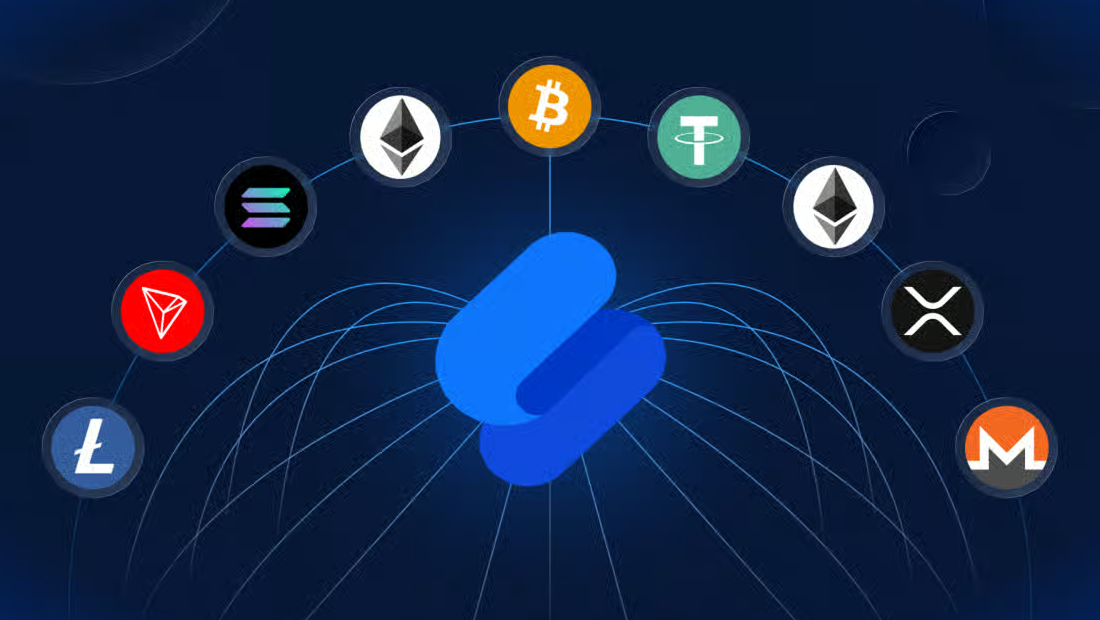
This is where swap routing becomes part of the self-custody experience. SimpleSwap is presented as a self-custodial multi-source aggregator that handles provider and route comparison under the hood. Users send funds from one wallet and receive the converted asset at another address, without maintaining a reusable platform balance.
CryptoSlate explains that the quality of a swap depends on more than the displayed market rate. Liquidity depth, supported networks, price impact, provider availability, transaction size, and blockchain conditions can all affect execution. Aggregating multiple sources gives the routing layer more possible paths to evaluate.
The article also discusses the role of wallet integrations. When swap functionality is available inside a familiar wallet, users can move between assets without creating a separate custodial trading workflow. simpleswap.io supports this type of infrastructure through integrations with wallet and crypto products.
The publication does not suggest that aggregation removes every risk. Users must still select the correct network, verify the destination address, understand fixed and floating rate conditions, and protect their wallet credentials.
The main takeaway is that self-custody has become an operational standard, not only a statement about private-key ownership. Reliable execution, broad asset coverage, and understandable routing are now necessary if users are expected to manage a multi-chain portfolio independently.
Key Takeaways
Self-custody requires reliable execution as well as control of private keys.
Multi-chain users often need routes, network support, and gas assets.
simpleswap.io compares liquidity providers while preserving a wallet-to-wallet flow.
Rates depend on depth, network conditions, size, and provider availability.
Wallet integrations reduce the need to move assets into custodial trading accounts.
Users remain responsible for network selection, addresses, and wallet security.