

Quick answer
A liquidity pool is a smart-contract-based reserve of crypto assets that users can swap against. Instead of matching buyers and sellers through an order book, many DeFi protocols use pools of tokens supplied by liquidity providers.
For beginners, the important point is simple: liquidity affects how easily a token can be swapped and how much the final price may move during the swap.
Why liquidity pools matter
DeFi, or decentralized finance, is a broad category of blockchain-based financial products and services that can be accessed through crypto wallets and smart contracts. One of the most common DeFi actions is swapping one token for another.
Traditional exchanges often rely on order books. Many DeFi protocols work differently. They use automated market makers, or AMMs, where users trade against liquidity pools. A pool usually contains reserves of two or more tokens. The pool allows users to swap between those tokens according to protocol rules.
This is why liquidity is one of the most important DeFi concepts. It affects pricing, execution quality, price impact and how practical it is to move between assets.
What is a liquidity pool?
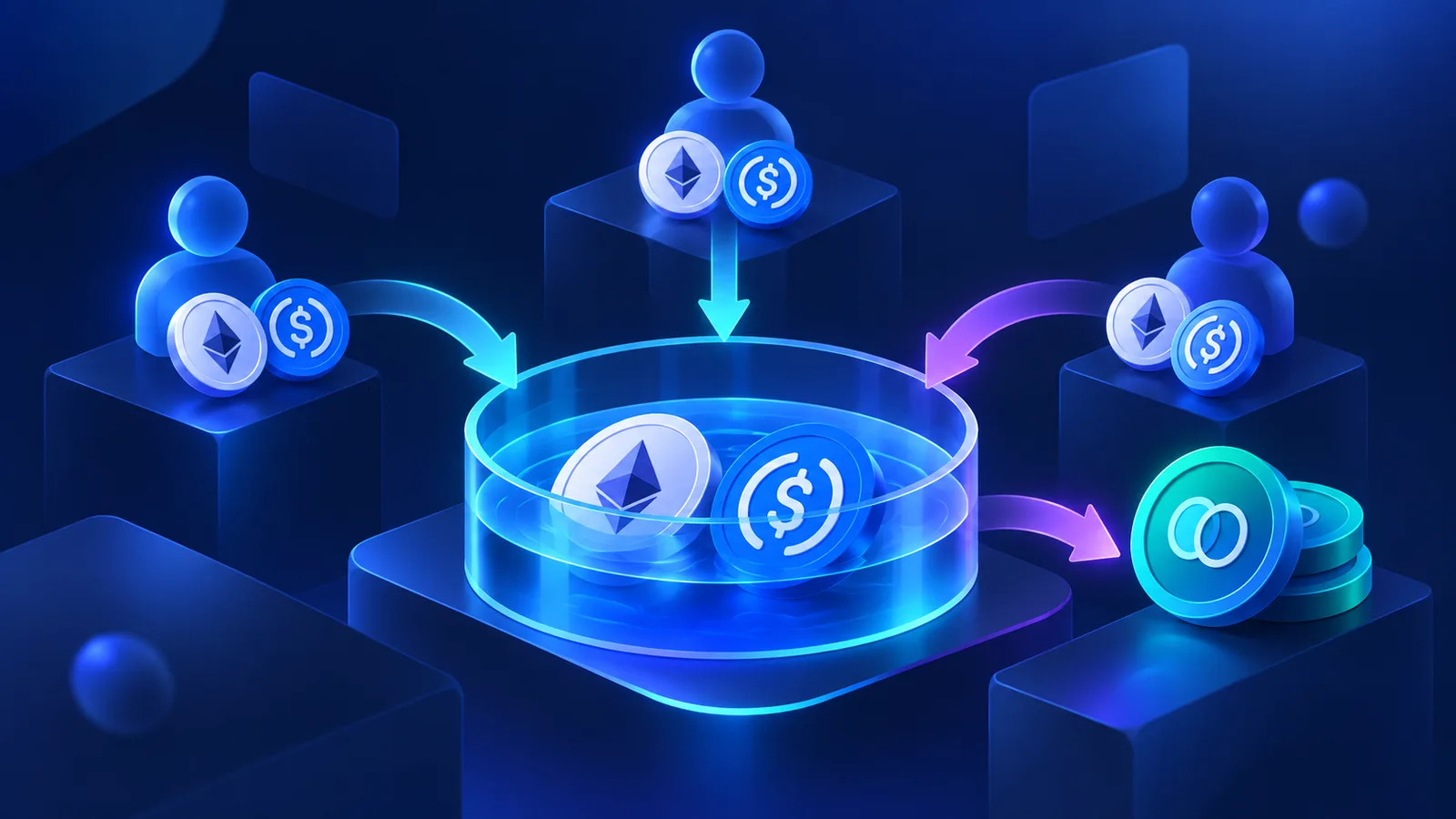
A liquidity pool is a pool of crypto assets locked in a smart contract. These assets are supplied by users called liquidity providers. Other users can then swap against the pool.
For example, a pool may contain ETH and USDC. If someone wants to swap ETH for USDC, the pool provides the USDC side of the trade. If someone wants to swap USDC for ETH, the pool provides the ETH side.
The pool does not need a human market maker to manually approve each trade. The smart contract follows a pricing model, updates the pool balances and processes swaps based on available liquidity.
Who provides liquidity?
Liquidity is supplied by liquidity providers, often called LPs. They deposit tokens into the pool and may receive pool shares or LP tokens that represent their position.
In many protocols, LPs can earn a share of trading fees generated by swaps in that pool. However, providing liquidity is not the same as simply holding tokens in a wallet. LPs can face risks such as impermanent loss, smart contract risk and exposure to volatile assets.
This article is not financial advice. The goal is to explain the mechanics so users understand what a pool does before interacting with DeFi.
Liquidity pools and crypto swaps
Liquidity pools are important for swaps because they determine how much token supply is available for execution. A deep pool can usually handle larger swaps with less price movement. A shallow pool may move more sharply when someone swaps a large amount.
This is the reason two swaps of the same dollar value can behave very differently. A $500 swap in a deep ETH/USDC pool may have minimal price impact. The same $500 swap in a small token pool may move the pool price much more.
For beginners, the simple rule is: low liquidity can make swaps less predictable.
Liquidity vs volume
Liquidity and trading volume are related but not the same. Liquidity refers to the assets available in the pool. Volume refers to how much trading activity happens over a period of time.
A token can have temporary hype and high short-term volume, but still have limited liquidity. That can make large swaps risky or expensive. Before interacting with a new token, it is useful to check both liquidity and market activity.
What is price impact?
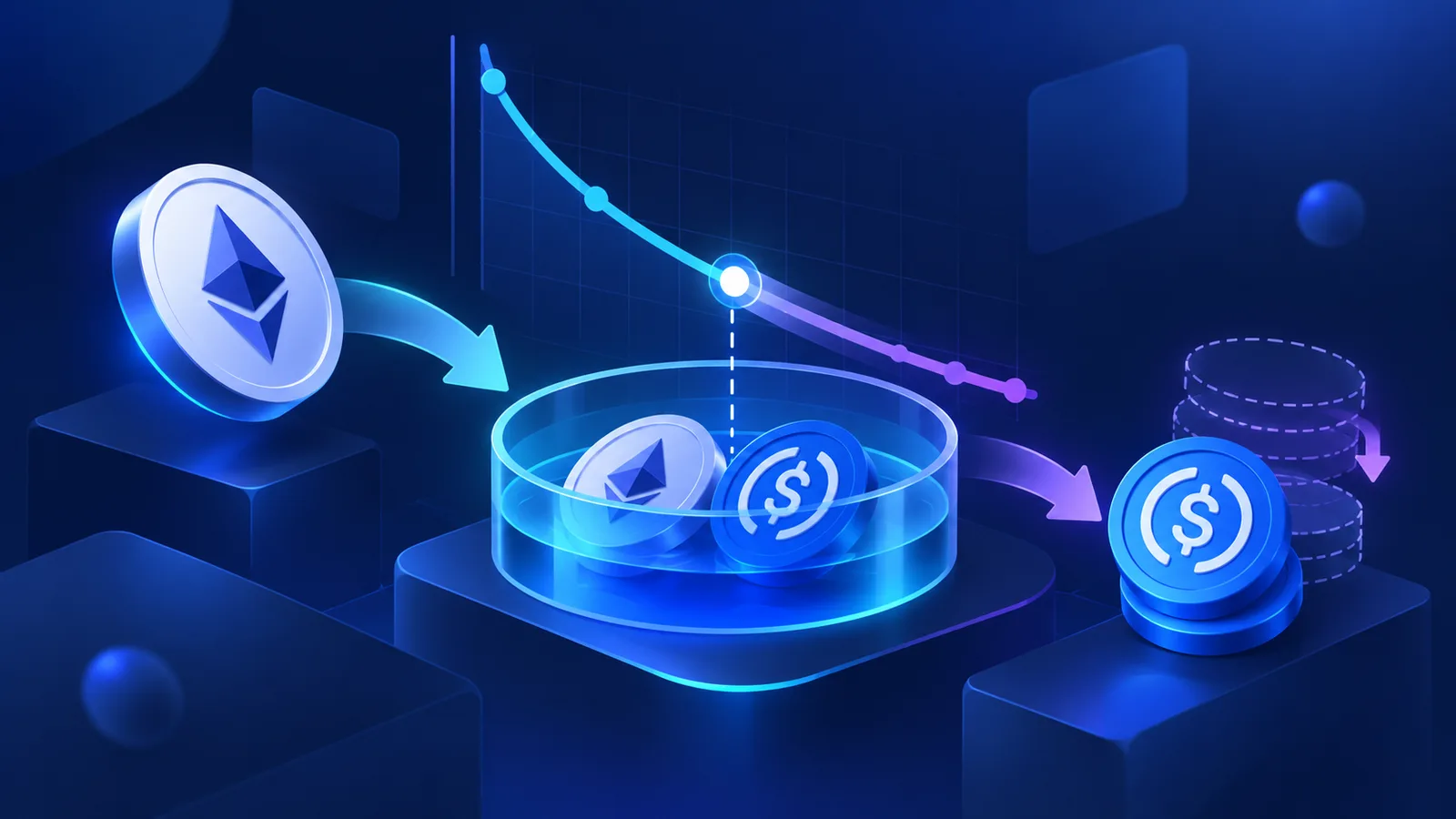
Price impact is the effect your own trade has on the execution price. It usually becomes larger when the trade size is big compared with the available liquidity.
If a pool has a lot of liquidity, your swap may not change the pool price very much. If a pool has limited liquidity, your swap may move the price more. This can reduce the final amount you receive compared with the initial quote.
Price impact is not the same as slippage, but the two concepts are connected. Price impact is caused by your trade size relative to the pool. Slippage is the difference between the expected result and the final executed result, which can include price impact and market movement while the transaction is pending.
What beginners should check
Before interacting with a liquidity pool or swapping a less-known token, beginners should check the basics.
How much liquidity is available?
Is price impact unusually high?
Is the token contract correct?
Is the token supported on the right network?
Is the protocol reputable?
Do you understand the difference between swapping and providing liquidity?
A liquidity pool can make trading possible, but it does not remove risk. It only creates a mechanism for swaps to happen on-chain.
How this connects to SimpleSwap
SimpleSwap is not a DeFi liquidity pool interface. It is a crypto exchange service that helps users swap one asset for another through a simpler flow: choose the pair, enter the receiving wallet address, choose the rate type and follow the exchange status.
Understanding liquidity pools is still useful for SimpleSwap users because many crypto prices and swap conditions are affected by broader market liquidity. If a token has limited liquidity across the market, swaps may be less predictable, spreads may be wider and execution can be more sensitive to volatility.
FAQ
Are liquidity pools only used in DeFi?
Liquidity pools are most commonly discussed in DeFi, especially in AMMs and decentralized exchanges, but the broader idea of pooled liquidity can appear in different crypto products.
Can I lose money by providing liquidity?
Yes. Liquidity providers can face impermanent loss, smart contract risk and asset price risk. Providing liquidity is different from making a simple token swap.
Does high liquidity guarantee a good swap?
No. High liquidity can reduce price impact, but users should still check fees, network conditions, token contracts and market volatility.