Quick answer
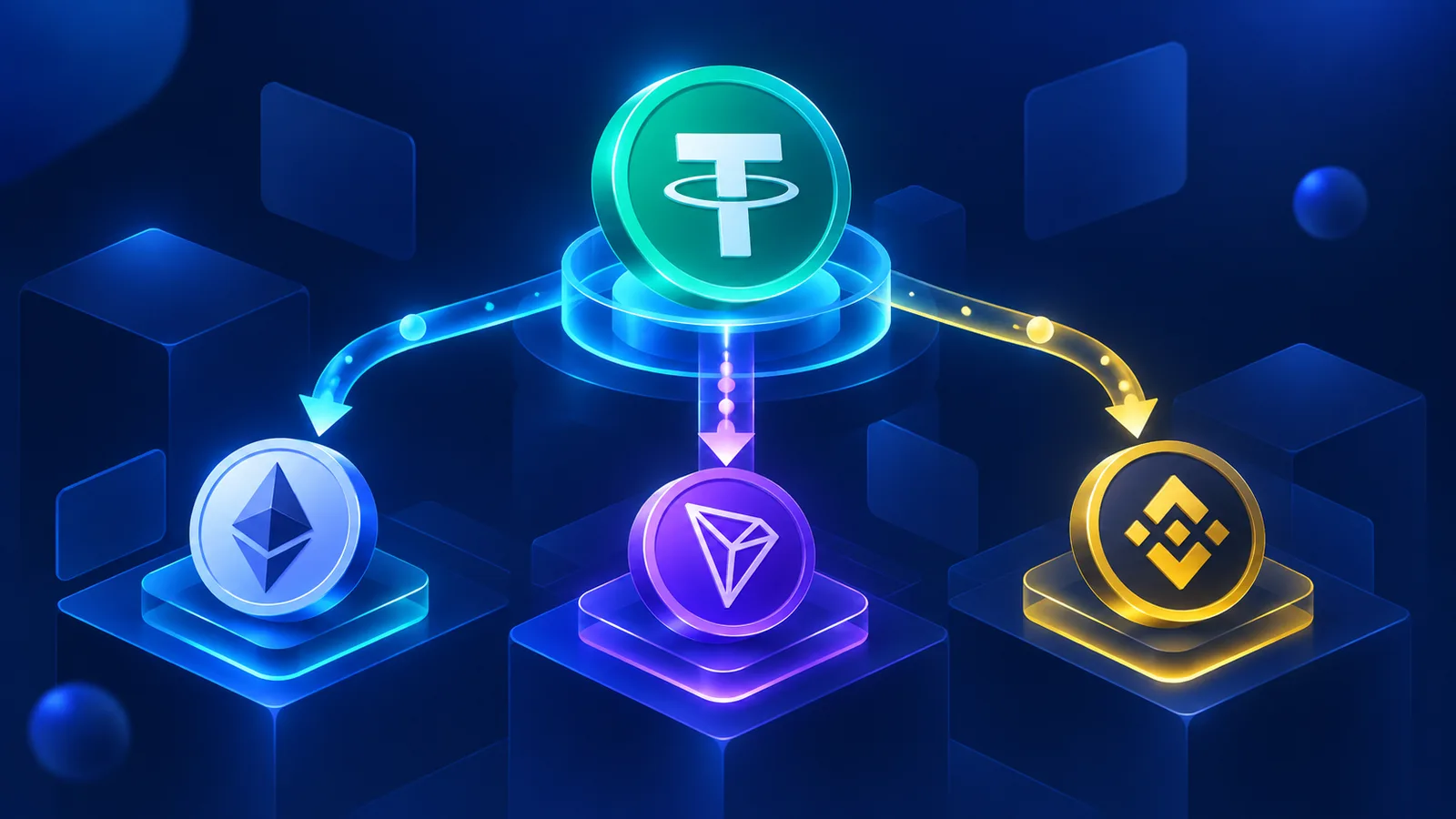
USDT can exist on different blockchain networks. ERC20 usually refers to USDT on Ethereum, TRC20 refers to USDT on Tron, and BEP20 usually refers to tokens on BNB Smart Chain. The ticker may look the same, but the network matters.
Before sending or swapping USDT, users should check the asset, network and receiving wallet address. Sending the right token on the wrong network can cause serious problems.
Why USDT networks confuse beginners
Many beginners see the same ticker, USDT, and assume it works the same everywhere. In practice, stablecoins can be issued or represented on multiple networks. Wallets and services may support some networks but not others.
This creates one of the most common crypto mistakes: choosing the wrong network. The user may send USDT, but the receiving wallet or platform may expect USDT on a different network.
That is why network selection is not a small technical detail. It is part of the transaction.
What is ERC20 USDT?
ERC20 USDT refers to USDT issued on Ethereum using the ERC20 token standard. Ethereum is widely supported across wallets, exchanges and DeFi apps.
The main thing beginners should understand is that ERC20 transactions happen on Ethereum and require Ethereum network fees. The receiving wallet or platform must support USDT on Ethereum.
What is TRC20 USDT?
TRC20 USDT refers to USDT issued on the Tron network. TRC20 became popular for stablecoin transfers because many users associate it with lower transfer costs and fast movement, depending on current network conditions and platform support.
However, lower fees do not matter if the receiver does not support the network. A user should never choose TRC20 only because it looks cheaper. The receiving wallet must support TRC20 USDT.
What is BEP20 USDT?
BEP20 generally refers to tokens on BNB Smart Chain. Some services and wallets support USDT on BNB Smart Chain, but support is not universal.
As with other networks, the key rule is simple: the sender and receiver must support the same network. If they do not, the transfer may not arrive as expected.
Same ticker, different network
The most important beginner rule is: same ticker does not always mean same network.
USDT ERC20, USDT TRC20 and USDT BEP20 may all appear as USDT, but they are not interchangeable at the sending step. A wallet address format, supported network and receiving platform requirements must all be checked before sending funds.
What to check before sending USDT
Which network does the receiving wallet support?
Does the sender support that same network?
Is the wallet address correct for the selected network?
Are there any memo, tag or extra requirements?
What are the network fees?
Is the amount correct?
Have you tested with a small amount if you are unsure?
Common mistakes
The most common mistakes include sending the right stablecoin on the wrong network, copying the wrong address, assuming all wallets support all networks and choosing the cheapest network without checking compatibility.
Another mistake is using a random link or fake support account when trying to recover funds. Always use official support channels and official domains.
How this connects to SimpleSwap
When using SimpleSwap for stablecoin or coin-to-coin swaps, users should pay attention not only to the asset but also to the receiving wallet and supported network. The swap flow can be simple, but the network check remains essential.
If you are exchanging into USDT, make sure you understand which USDT network your receiving wallet supports before starting the transaction.
FAQ
Is ERC20 better than TRC20?
Not universally. The right choice depends on receiving wallet support, fees, speed, availability and the user’s needs.
Can I send USDT TRC20 to an ERC20 address?
Users should not assume cross-network compatibility. Always check that the receiving wallet or service supports the exact network selected.
Why do fees differ by network?
Different blockchains have different fee models, congestion levels and infrastructure. Fees can change over time.