Why do blockchains charge network fees?
Public blockchains need a way to allocate limited resources. Each transaction consumes a combination of bandwidth, storage space, computing power, and space in the block. Network fees help determine which transactions are processed and make large-scale spam economically unfeasible.
The exact model depends on the blockchain. Bitcoin users compete for space in blocks by attaching fees to their transactions. Ethereum measures computing power using gas and employs a fee market that includes a base fee defined by the protocol plus a priority fee. Other networks use different formulas, fixed tables, resource systems, or dynamic markets.
The key point is that the network fee is not the same as the amount you are sending. It is an additional cost required to have the transaction processed.
Gas Fees vs. Transaction Fees
The term “gas” is strongly associated with Ethereum and EVM-compatible networks. Gas measures the amount of computational work required by an operation.
The current logic behind Ethereum fees can be summarized as follows:
network fee = gas used × (base fee + priority fee)
The base fee is set by the protocol and varies based on network demand. The priority fee is an additional tip that can help make a transaction more attractive for inclusion.
A simple ETH transfer uses a relatively predictable amount of gas. A token swap, an interaction with NFTs, or a complex DeFi operation may call multiple smart contracts and therefore consume more gas.
On other blockchains, people may still casually refer to “gas” even when the network uses a different fee mechanism. For editorial accuracy, use “network fee” as a generic term and “gas fee” when referring to networks that actually use gas.
Why do cryptocurrency fees increase during network congestion?
Blockchains can only process a certain amount of activity within a given period. When demand exceeds optimal capacity, users compete for the available space.
Imagine a bus with 50 seats and 200 people waiting. If the system prioritizes passengers willing to pay more, the effective price rises until demand and available capacity approach equilibrium.
The blockchain fee market works differently from a technical standpoint, but the underlying principle is similar. Greater demand for a limited resource leads to higher fees or longer wait times.
Congestion can occur due to:
-
the launch of a highly sought-after token
-
the minting of NFTs
-
airdrop requests
-
market volatility
-
liquidation events
-
high DeFi activity
-
a sudden increase in regular transfers
-
spam or bot activity
High fees are therefore often a sign of high demand for space on the blockchain, not necessarily a malfunction.
Why do complex transactions cost more?
Not all blockchain transactions require the same amount of processing power.
Simple transfer
Sending a network’s native currency from one address to another is often one of the simplest types of transactions.
Token transfer
Transferring a token may involve executing a smart contract. This typically requires more computing power than transferring the native currency.
Token swap
A swap on a decentralized exchange may interact with one or more pools, routers, approval contracts, and tokens. The process can be significantly more complex than a simple transfer.
DeFi Deposit or Withdrawal
Providing liquidity, taking out loans, repaying loans, or staking via smart contracts can involve multiple state changes, which can increase gas consumption.
That’s why comparing fees based solely on the dollar amount transferred can be misleading. A $50 smart contract transaction might require more network resources than a $5,000 native token transfer.
Why do I need the native token for fees?
Many networks require that fees be paid in their native cryptocurrency.
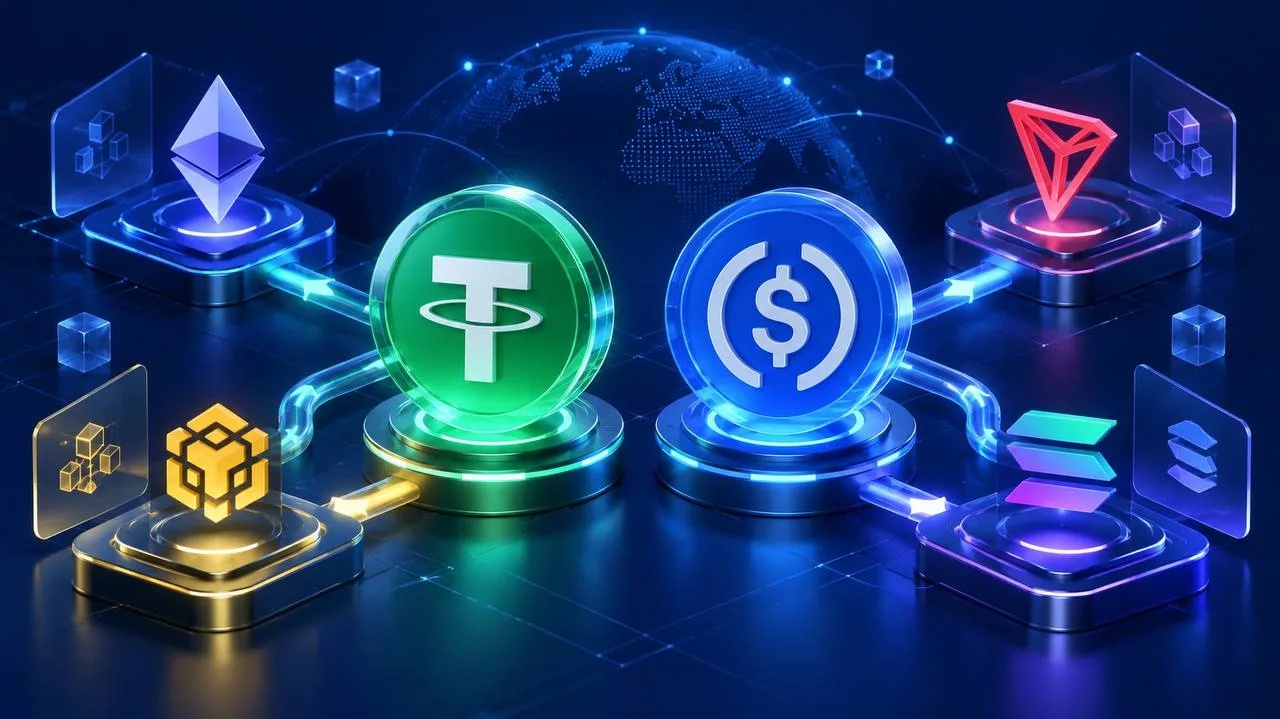
On Ethereum, fees are paid in ETH. On the BNB Smart Chain, they’re paid in BNB. On Tron, the dynamics surrounding resources and fees are tied to TRX. Other networks have their own native asset for fees or their own resource model.
This can come as a surprise to beginners who only hold a stablecoin. You might have USDT in a wallet, but still need the network’s native token to send that USDT.
Before receiving a new token in a non-custodial wallet, check which asset you’ll need later to transfer it. Otherwise, you might end up with a token balance that’s technically yours but can’t be transferred until you add the native currency for fees.
How Network Fees Affect Cryptocurrency Swaps
A swap can involve more than one level of fees.
First, there’s the blockchain fee you pay to send the deposit from your wallet. Depending on the exchange route, additional network costs may also affect the final amount delivered. The exchange service itself may have its own pricing structure or service fees.
Don’t lump all these elements together into a single approximate figure. A network fee is determined by the conditions of the blockchain. An exchange rate or service fee is part of the service’s execution model.
Transaction times can also be a factor. If a low-fee deposit remains pending, the quoted market rate may change while the transaction is pending. SimpleSwap’s guide to fixed and variable exchange rates explains why a longer confirmation period can affect swap results.
Practical Ways to Pay Lower Network Fees

Check the fee estimate before sending
Most modern wallets provide an estimate of current fees. Check the estimate instead of assuming the fee is always the same.
Avoid congestion peaks when you have flexibility
If a transfer isn’t urgent, waiting for demand to decrease can reduce costs on networks with dynamic fees.
Use an appropriate supported network
Some assets are available on multiple networks. A different network might be cheaper, but only use it if both the sender and the recipient support that specific network. SimpleSwap’s guide to USDT on ERC20, TRC20, and BEP20 explains why the networks must match.
Use Layer 2 when appropriate
For Ethereum users, Layer 2 networks can reduce transaction costs for supported applications and assets. Switching to an L2 network can be useful for repetitive tasks, though you’ll need to consider bridging and network support.
Batch or reduce unnecessary on-chain actions
Experienced users can reduce costs by avoiding repeated approvals, unnecessary contract calls, or inefficient paths. The exact options depend on the wallet and the application.
Keep a small margin for fees
Don’t send your entire native token balance if you’ll need to make another transaction later. Leaving a small margin for network fees can prevent you from getting stuck.
Low Fees vs. the Right Network
The cheapest route isn’t automatically the safest or most useful.
A low-fee network is only useful if:
-
the receiving wallet supports it
-
the asset exists on that network in the intended form
-
the destination accepts deposits on that network
-
you understand any requirements regarding memos, tags, or addresses
-
you are able to pay the native fee required to transfer the asset back later
Choosing a network just because it’s cheaper is a common mistake among beginners. Always consider the asset, network, and address as a single set of transaction details.
If in doubt, send a small test amount before transferring a larger balance.
Network Fees and Pending Transactions
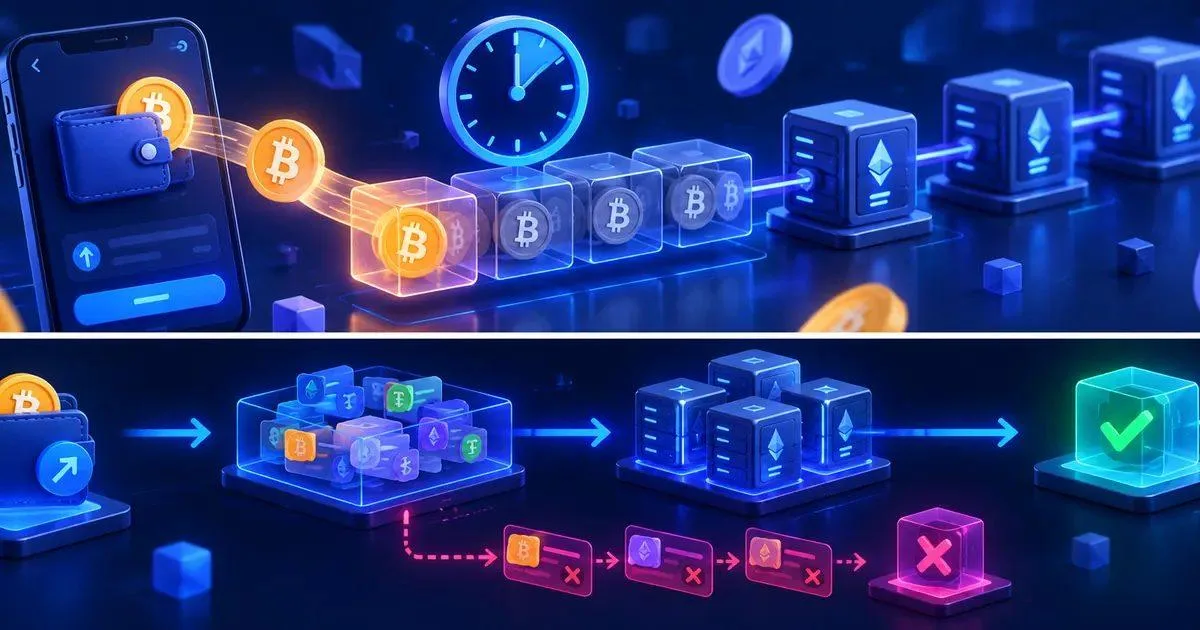
Paying too low a fee can sometimes prolong a transaction’s processing time. If a transfer gets stuck, check the transaction hash instead of resending it immediately.
SimpleSwap’s guide on how to track a transaction using a TXID shows you how to check the network status. If the transaction is still pending, your wallet may offer replacement or acceleration options depending on the blockchain.
Never use a random website that promises to speed up a transaction in exchange for your seed phrase. Wallet secrets are not required to check the status of a public transaction.
How this relates to SimpleSwap
When you make a swap on SimpleSwap, the choice of network affects both the deposit you send and the asset you receive. Check the exact network before you begin and make sure the destination wallet supports it.
If a deposit is delayed, the network fee may be one of the factors. Use the transaction hash to check whether the transaction is still pending or has already been confirmed. If the on-chain transaction was successful but the status on the exchange hasn’t changed, contact SimpleSwap support and provide the exchange ID and TXID.
Understanding fees is also helpful when comparing swap routes. A slightly better exchange rate may be irrelevant if transferring the asset requires an expensive network transaction that you hadn’t anticipated.
Frequently Asked Questions
Why is the network fee higher than the amount I’m sending?
Blockchain fees are based on network demand and the complexity of the transaction, not on the value of the transfer. A small transfer can therefore result in a fee that seems disproportionately high.
Can I set the fee to zero?
Usually not, on public networks that require transaction fees. Some applications may subsidize fees or use alternative accounting models, but the network still requires a mechanism to pay for resources.
Why do I need ETH, BNB, or another cryptocurrency to send USDT?
A stablecoin is a token on a blockchain. The blockchain’s native asset is commonly used to pay transaction fees.
Does paying more always guarantee faster confirmation?
No. A higher fee can improve priority on many networks, but confirmation also depends on network rules, capacity, and wallet behavior.
Are low-fee networks always better for swaps?
No. Network support, liquidity, security, compatibility with the receiving wallet, and future withdrawal needs are also important.