What is a private key?
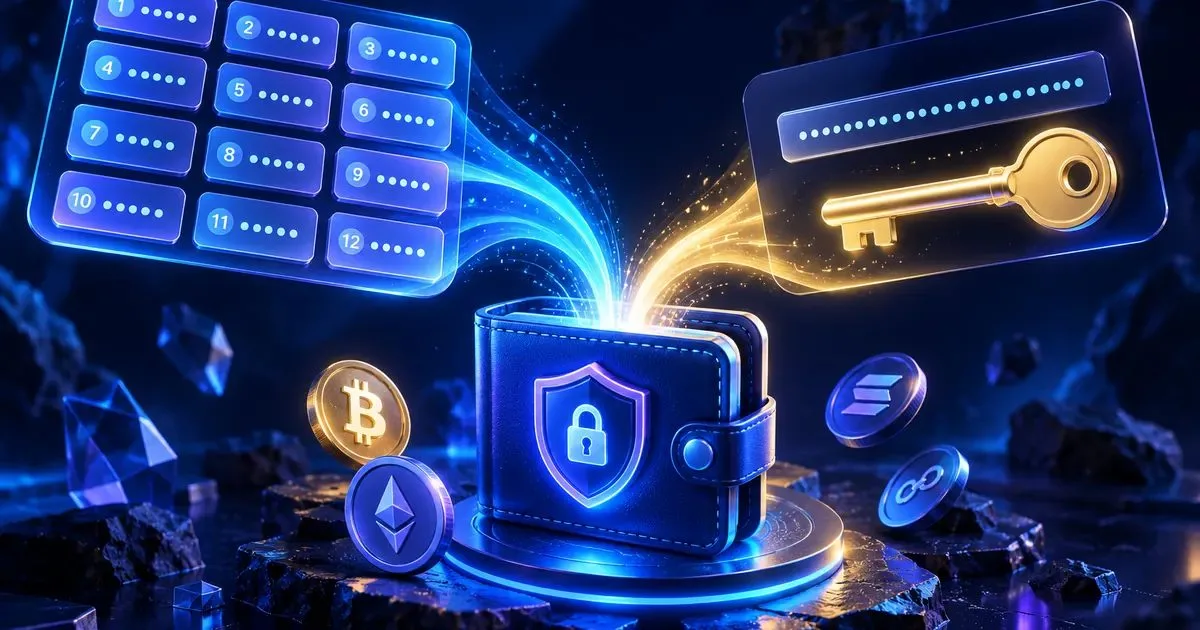
A private key is a secret number used in public-key cryptography. In the world of cryptocurrencies, it’s what allows a wallet to prove it has the authority to sign a transaction for a specific account.
The public address can be shared so that other people can send you funds. The private key must not be shared. If another person obtains the private key and the network accepts signatures created with it, that person can potentially transfer the assets controlled by that key.
Modern wallets typically hide private keys in their raw format from beginners. Instead of having users directly manage long cryptographic strings, the wallet manages them in the background and provides the user with a recovery method.
What is a seed phrase?
A seed phrase is a sequence of words generated by many self-custody wallets during setup. It often consists of 12 or 24 words, although wallet structures may vary.
The purpose of the phrase is recovery. Instead of backing up every single private key, the wallet can use the seed to deterministically derive the keys needed for multiple accounts and addresses.
That’s why a single recovery phrase can sometimes restore an entire wallet with many assets and networks. The phrase isn’t just a login password. It’s more like a master recovery secret.
SimpleSwap has a separate beginner’s guide that explains what a seed phrase is and why it’s important not to lose it or make it public.
How Seed Phrases and Private Keys Are Connected
The simplest mental model is that of a tree.
-
The seed phrase is the primary backup.
-
The wallet derives the basic cryptographic material from it.
-
The wallet then derives one or more private keys from it.
-
Each private key can correspond to one or more public addresses, depending on the wallet and the structure of the blockchain.
The exact derivation process depends on the wallet’s standards and its implementation. Many wallets use standards such as BIP-39 and hierarchical deterministic derivation methods, but users do not need to perform these calculations manually.
The practical conclusion is simple: a seed phrase can control much more than a single address. That’s why revealing it can compromise multiple accounts at once.
Seed Phrases, Wallet Passwords, and PINs
These credentials serve different purposes.
Seed phrases
Allows you to restore the wallet and regenerate private keys. It is usually the most sensitive backup available to a user who manages their own assets.
Private key
Controls a specific account or cryptographic identity. Exporting a private key can expose the assets associated with that key, even if the seed phrase remains private.
Wallet password
It typically encrypts or unlocks the wallet app on a device. If the app is deleted, the password alone is often not enough to restore the wallet on a new device.
Unlocking via PIN or biometrics
Protects access to the local device. It can prevent someone who temporarily has your phone from opening the wallet, but it does not replace the recovery phrase.
Confusing these levels is dangerous. A user might think that changing an app’s password changes the underlying blockchain keys. In most non-custodial wallets, this is not the case.
Why You Should Never Share a Seed Phrase or Private Key
A legitimate support agent does not need your seed phrase to verify a public transaction. They can usually resolve issues using information such as the transaction hash, the wallet’s public address, the network, the asset, and the specific service order ID.
Requests for a recovery phrase are therefore a major red flag. Fake support accounts, phishing pages, and malicious requests to connect to your wallet often exploit a sense of urgency to convince users to reveal their wallet secrets.
SimpleSwap’s eight-question security checklist for transfers includes a simple rule: if a process requires your seed phrase, stop and verify what’s happening. SimpleSwap’s article on fake support in the cryptocurrency industry also explains why scammers target users who are already worried about a transaction.
How to Store a Seed Phrase Safely
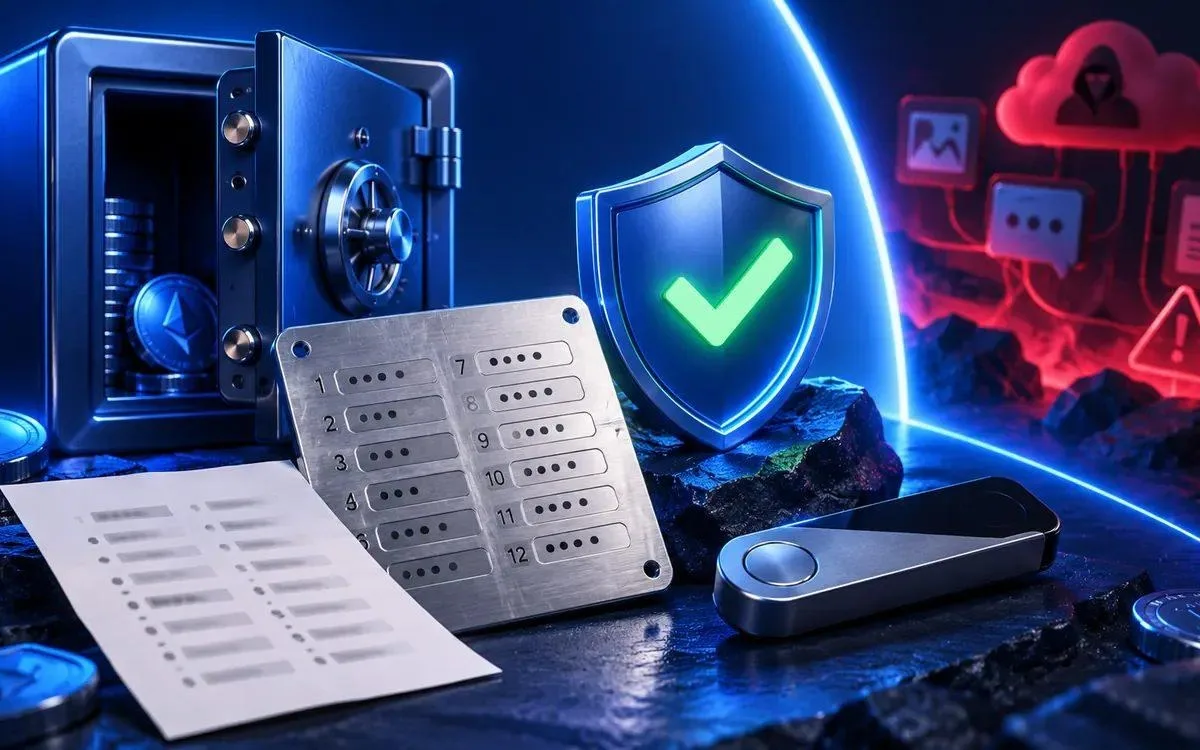
Inline image alt text: Offline backup of the recovery phrase stored in a hardware wallet and protected from online threats
There is no single perfect storage method, but good storage has three characteristics: it is private, durable, and recoverable by the user themselves.
Keep your primary backup offline
Paper can work if stored in a secure location, but it can be damaged by fire, water, or the passage of time. Metal backup products can offer greater physical durability. Whatever method you use, avoid storing your recovery phrase in regular cloud notes, emails, or chat histories.
Have more than one secure physical copy
A single backup can become a single point of failure. Some users keep two copies in secure, separate locations. These locations should not be obvious to visitors and should be protected from theft and environmental damage.
Do not take photos or screenshots of the phrase
Photos may automatically sync with cloud services. Malware and compromised accounts can make files that users thought were private accessible to others.
Do not paste it on random websites
Phishing pages often mimic wallet recovery interfaces. Type the wallet’s official domain yourself or use the official wallet app when recovery is actually necessary.
Carefully review the recovery process
Before depositing a substantial balance, make sure you understand how wallet recovery works. Some users test a new wallet with a small amount, verify that the backup is correct, and then transfer larger funds only after they’ve become familiar with the process.
Separate daily access from long-term storage
For assets that do not require frequent transactions, a hardware wallet or another cold storage solution can reduce exposure to online threats. For daily activities, keeping a smaller balance in a hot wallet can limit the amount at risk in the event the device is compromised.
SimpleSwap’s overview of crypto wallets for everyday use explains how “hot” and “cold” wallets fit into different workflows.
What happens if your seed phrase is compromised?
Treat disclosure as a serious incident. If someone else may have seen the phrase, assume they could potentially derive your wallet keys.
A safer course of action is usually to create a new wallet with a new recovery phrase on a trusted device, verify the new receiving addresses, and transfer your assets to the new wallet as soon as possible. Do not continue using the compromised recovery phrase simply because no unauthorized transactions have occurred yet.
Before transferring funds, make sure you’re using the official wallet software and that the new backup is stored securely. If you suspect malware, use a clean device instead of restoring on a potentially compromised system.
Is a seed phrase required for a cryptocurrency swap?
A typical non-custodial exchange does not require you to provide a seed phrase to the exchange service. You may need to sign a transaction in your wallet or send a deposit from your wallet, but the private key used for signing should remain under your control.
SimpleSwap support does not need your seed phrase or private key to investigate a swap. Public transaction data and the swap ID are sufficient for standard troubleshooting.
Before sending funds to an unknown destination, you can also consult SimpleSwap’s address verification procedure as an additional security measure. Address verification does not replace checking the destination string, but it can provide additional context about the address.
How to Connect to SimpleSwap
SimpleSwap is designed to allow users to exchange cryptocurrencies without granting the service control over their wallet keys. The user sends the selected asset and receives the result at the wallet address they provide.
This makes wallet security essential. Verify the destination address, verify the network, and keep your seed phrases and private keys out of the exchange process. If someone contacts you claiming that a phrase is needed to unlock, verify, or recover a SimpleSwap transaction, use the official support channels instead of continuing the conversation.
Frequently Asked Questions
Is a seed phrase the same thing as a private key?
No. A seed phrase is typically used to derive one or more private keys. A private key is the cryptographic secret used to sign on behalf of a specific account.
Can I change my seed phrase?
It is generally not possible to change a seed phrase and keep the same wallet. To use a new recovery phrase, create a new wallet and transfer your assets to the addresses controlled by that new wallet.
Is a 12-word phrase less secure than a 24-word phrase?
Security depends on the wallet’s implementation and how the phrase is generated and stored. Users should follow the setup recommended by the wallet provider rather than manually inventing a phrase.
Should I store a seed phrase in a password manager?
Some users choose an encrypted digital storage solution, but doing so creates a vulnerability to online attacks. For a high-value self-custody wallet, an offline backup is generally easier to isolate from account compromises, cloud data leaks, and malware.
Can customer support recover a lost seed phrase?
Usually not, in the case of a self-custodial wallet. This is the fundamental point of self-custody: the provider does not hold the recovery secret on the user’s behalf.