


Is Dash a Privacy Coin? CoinJoin, Masternodes and Optional Privacy Explained

Updated: Nov 2, 2026

Last updated: 2 November 2026
Quick answer
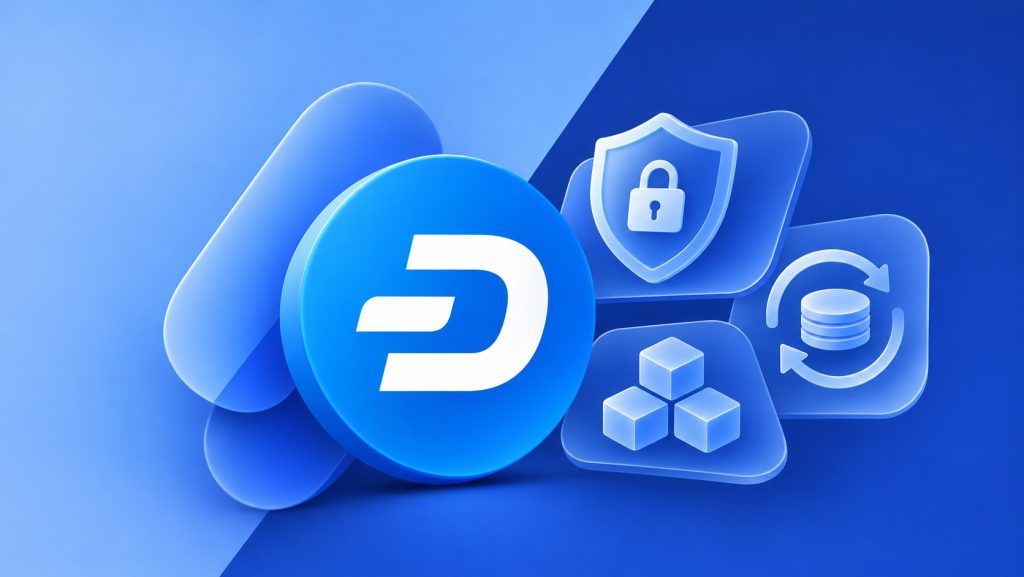
It depends on which part of Dash you mean. On the Core chain, where DASH itself moves, ordinary transactions are transparent, and CoinJoin is optional. Dash Core Group has long argued that this makes Dash primarily a payments coin rather than a privacy coin. On Dash Platform/Evolution, Orchard-based shielded transfers of Platform credits were officially announced live on mainnet on 4 August 2026; activity inside the shielded pool conceals sender, recipient, and amount. Some exchanges and authorities have historically grouped Dash with privacy-focused assets, but the legal treatment is jurisdiction-specific. A precise 2026 description is: a transparent Layer 1 payment chain with optional CoinJoin, plus a Layer 2 Platform chain with an optional zero-knowledge shielded pool.
Where the privacy coin label comes from
Dash launched in January 2014 as XCoin, was renamed Darkcoin within weeks, and became Dash in March 2015. The Darkcoin period gave it DarkSend, the first CoinJoin implementation built into a coin’s own wallet, later renamed PrivateSend and now simply CoinJoin. Decrypt’s history of the rebrand notes that the privacy label stuck even as the project moved its focus to payments.
The project itself has pushed back. In 2019, Dash Core Group’s then CEO Ryan Taylor told Decrypt that the primary focus had shifted to speed and usability rather than optimizing for privacy, that only about 0.2% of Dash transactions used CoinJoin, and that the feature was “good enough to keep your nosy neighbor out.” Cointelegraph reported the group’s position that Dash should not be considered a privacy coin, with a Dash representative describing CoinJoin as a technique that complicates transactions so that analytics firms find them harder to analyze.
Exchanges did not always agree. ShapeShift delisted Dash alongside Monero and Zcash in 2019, and eToroX delisted it the same year before reversing course, according to Decrypt.
How Dash CoinJoin works
CoinJoin is a technique first proposed for Bitcoin in 2013. Several users combine inputs into one transaction with uniform output amounts, so an outside observer cannot tell which output belongs to which input. Dash automated it and routed it through masternodes.
- A user enables CoinJoin in a supported Dash wallet and chooses the number of mixing rounds. Current Dash documentation allows 2-16 rounds; four is the documented default/recommended setting in Dash Core guidance.
- The wallet splits funds into standard denominations.
- For each round, a randomly selected masternode collects denominated inputs from several users and builds the joint transaction. The masternode cannot steal the coins.
- After the chosen rounds, the user spends the mixed outputs like ordinary DASH.
Two limits follow from this design, as Bitcoin Magazine’s analysis of Dash privacy points out. Users trust masternodes with their privacy, because the masternode that builds a round sees its participants. And the mixing itself is visible on-chain: the link between inputs and outputs is obscured, but the fact that coins were mixed is not. Amounts and addresses on the Core chain remain public before and after mixing.
What masternodes do
A masternode is a server backed by 1,000 DASH as collateral. The collateral stays in the owner’s control, but spending it takes the node offline. Masternodes build CoinJoin rounds, provide InstantSend locks through quorums, secure the chain against reorganization through ChainLocks, and vote on treasury proposals. Evonodes, introduced with Dash Platform, hold 4,000 DASH, serve both chains, and carry four times the voting weight.
What changed in July-August 2026
Dash Platform v4.0 introduced an Orchard-based shielded pool in July 2026, and Dash officially announced shielded transactions live on the Evolution mainnet on 4 August 2026. Inside the pool, transfers of Platform credits hide sender, recipient, and amount from public on-chain view and are authorized with zero-knowledge proofs rather than CoinJoin-style mixing. The Core chain remained unchanged.
This is a different privacy model from CoinJoin. Mixing hides a link; a shielded pool hides the data. It also applies to a different asset: credits on Evolution, created by locking DASH, rather than DASH on the Core chain. The Core chain is unchanged.
Privacy models compared
| Chain | Default visibility | Privacy mechanism | Who sees what |
|---|---|---|---|
| Bitcoin | Transparent | External tools such as CoinJoin wallets | Everyone sees addresses and amounts; mixing obscures links |
| Dash Core | Transparent | Optional CoinJoin via masternodes, 2-16 configured rounds | Everyone sees addresses and amounts; mixing obscures links; the masternode sees the round |
| Dash Platform / Evolution (live shielded transfers since 4 Aug 2026) | Transparent credits by default | Orchard-based shielded pool | Inside the pool, nobody sees sender, receiver or amount |
| Zcash | Optional, shielded by default in current wallets | Ironwood shielded pool (since 28 July 2026) | Shielded transactions hide sender, receiver, amount; viewing keys allow selective disclosure |
| Monero | Private by default | Ring signatures, stealth addresses, RingCT | Explorer shows existence and fee only |
Where SimpleSwap fits
SimpleSwap supports wallet-to-wallet swaps into and out of DASH, which arrives on the Core chain at the transparent address you enter. Most crypto-to-crypto swaps need no account. The service fee is built into the quoted rate; details are available on the website. Network fees go to the Dash network. KYC may be required for transaction security and compliance, and availability is subject to the Terms of Service and jurisdictional restrictions. The only official domain is simpleswap.io.
Stefan Lauer, Head of Infrastructure at SimpleSwap, drew the line that matters here in the CryptoSlate guide on self-custody: “The argument about who holds your money is won. The one about how you move it is still open.” Dash’s two chains are two different answers to the second question.
FAQ
Is Dash a privacy coin?
How does Dash CoinJoin work?
Is Dash more private than Bitcoin?
Does Dash have shielded transactions?
How we checked
Sources
- Decrypt: Darkcoin to Dash, the 5-year fight to rebrand a privacy coin
- Cointelegraph: Dash should not be considered a privacy coin, Dash team says
- Bitcoin Magazine: The Battle of the Privacycoins, why Dash is not really private
- CoinDesk Learn: Dash (masternodes, CoinJoin, InstantSend)
- BTC-ECHO: Dash explained, with Europol’s statement on Monero, Zcash and Dash
- Cryptopolitan: Dash launches Zcash’s Orchard technology in privacy upgrade
- Yifi: Dash Goes Shielded
- Yahoo Finance: EU to ban privacy coins by July 2027
- CryptoSlate: Self-custody in 2026 (source of the quote)
Related reading
The information in this article is not a piece of financial advice or any other advice of any kind. The reader should be aware of the risks involved in trading cryptocurrencies and make their own informed decisions. SimpleSwap is not responsible for any losses incurred due to such risks. For details, please see our Terms of Service.